

Mastering the language of the road
Unlock the secrets of road signs and become a confident, safe driver for life. Understand not just what they mean, but why they're there, and how to react to them.
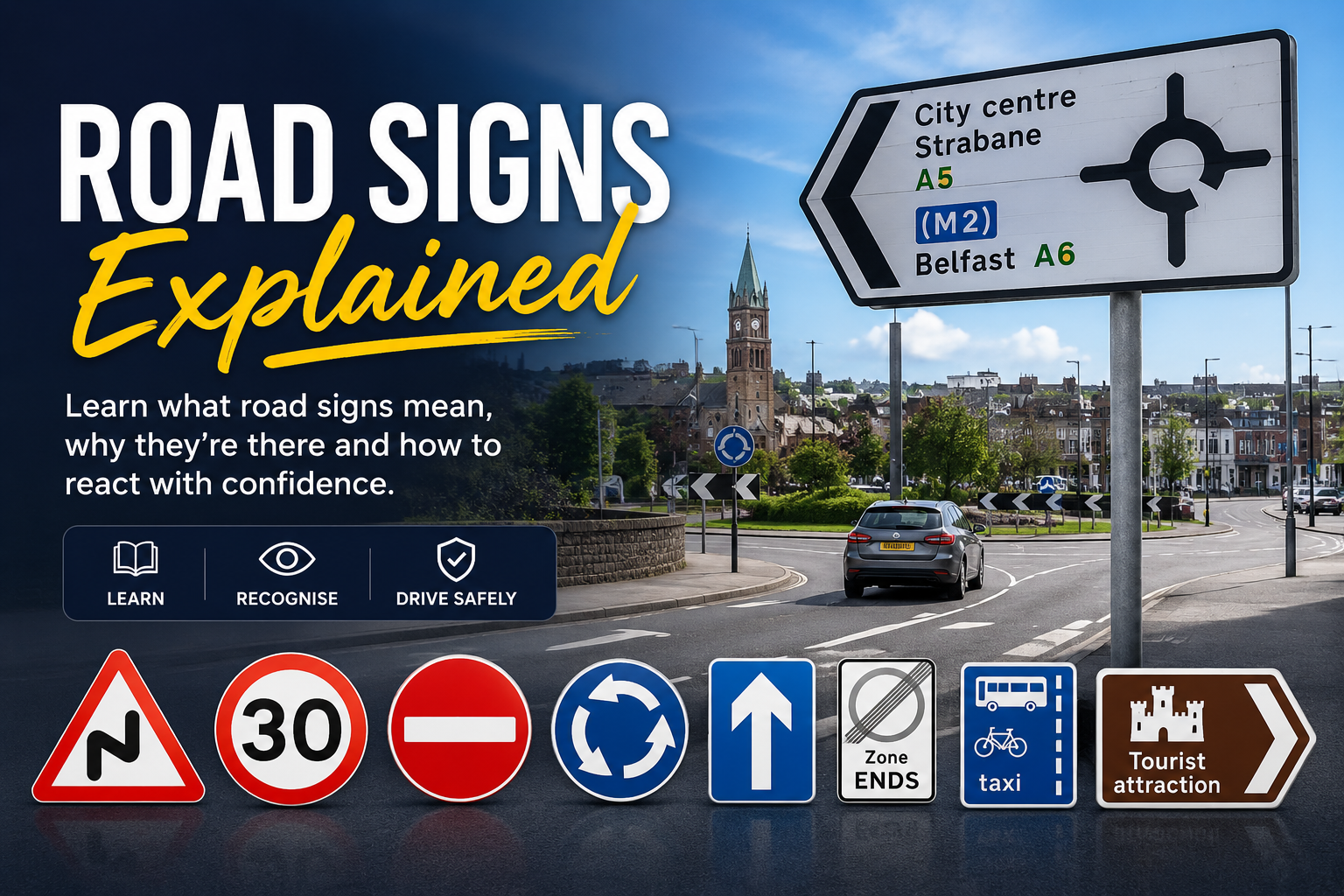
Why understanding road signs matters
Understanding road signs is essential because they provide the information you need to make safe, confident decisions on the road. Knowing what each sign means helps you anticipate hazards, follow the rules of the road and choose the correct speed, lane or direction before it's too late. A lack of understanding can lead to hesitation, poor decision-making and driving faults during your test. In everyday driving it can increase the risk of dangerous situations. By learning road signs properly, you'll not only improve your chances of passing your Theory and Practical Tests but also become a safer, more aware driver for life.

Your guide to essential road signs
This page will cover all of the major road signs learners need to know for both their Theory Test and Practical Test, with extra emphasis on signs commonly encountered around L/Derry and throughout Northern Ireland. This includes speed limit signs, warning signs, roundabouts, pedestrian crossings, lane guidance, parking restrictions, bus lanes, one-way systems, no entry signs and motorway or dual carriageway signage. Each sign will be explained in a clear, easy-to-understand way, with practical examples of where learners are likely to encounter them on local roads, helping them recognise and respond to signs confidently in real driving situations.
🔺 Warning Signs
Warning signs are triangular with a red border and alert you to hazards or changes ahead.
Common Examples;
- Bend ahead
- Double bend
- Crossroads
- Roundabout ahead
- Traffic signals ahead
- Pedestrian crossing
- School crossing
- Road narrows
- Steep hill
- Slippery road
- Wild animals
- Low bridge
Remember: These signs warn you to slow down and prepare for a potential hazard.